
Building an Autonomous Sales Department: Insights from Baltic Business Club
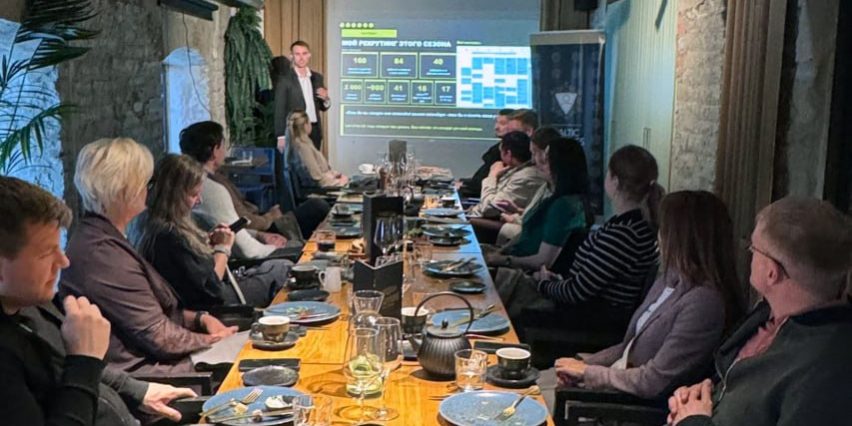
On 12 May, Baltic Business Club organised an exclusive business dinner in Tallinn focusing on adapting American sales methods to Estonian business realities. The keynote speaker was Nikita Vlassenkov, Head of Sales at Southwestern Advantage – a company renowned for its highly standardized processes and a relentless focus on execution discipline.
The evening wasn’t just a lecture; it was an open dialogue. Participants dissected real-world management hurdles – from delegation friction and employee resistance to building systems that foster accountability and engagement among Gen Z professionals.
The conversation quickly moved beyond scripts and KPIs. It hit on a deeper question: Why do even strong products and motivated teams often fail to scale?
The answer lies in the system.
The Core Idea
This wasn’t just a talk about selling. It was about how a leader can stop micromanaging and start leading. The goal is a team that:
- Understands their tasks.
- Takes true ownership.
- Prepares thoroughly for every interaction.
- Sees the direct link between effort and result.
- Grows without constant “hand-holding.”
In short: how to turn a sales department into a self-running mechanism rather than a group of people who need a daily push.
1. Accountability: Responsibility as a System
One of the night’s pillars was Accountability. In management, this goes beyond just “being responsible.” It’s about a transparent environment where everyone knows what they own, how it’s measured, and what the next step is.
In simple terms: Accountability doesn’t happen because you told someone to “be more responsible.” It happens when an employee knows:
- What is expected from him;
- Why it matters;
- What “good result” looks like;
- When is the deadline;
- Who is checking the work;
- What to do if they get stuck.
Nikita highlighted a key idea: employees usually fail for two reasons – they don’t know why they’re doing it, or they don’t know how to do it. And that is the leader’s responsibility.
The Management Shift: If an employee underperforms, don’t ask “What’s wrong with them?” Ask: “Did I provide enough clarity for them to succeed?” This moves the focus from emotions to the system.
The Delegation Checklist: Before handing off a task, ensure the answer is “Yes” to these points:
- Do the employees understand the purpose of a task?
- Is the expected outcome defined?
- Have the employees seen an example of an excellent outcome?
- Is the first step clear?
- Is there a deadline and a check-in point?
- Can they repeat back exactly what they are going to do?
2. CSF: Turning Goals into Daily Actions
CSF stands for Critical Success Factors. A massive sales target rarely changes behavior on its own. Behavior changes when that target is broken down into specific, daily actions.
Saying “we need more sales” is white noise. Instead, focus on the inputs:
- How many new outreaches today?
- How many follow-ups were sent?
- How many times did we practice the script?
- Which specific skills are we sharpening?
CSF Logic in Action:
- Goal: Increase Revenue.
- Success Factors: 30 new touchpoints daily + daily follow-ups on all open leads + weekly review of 3 lost deals.
When an employee sees the chain “Daily Actions → Personal Growth → Higher Income” discipline stops being a chore and becomes a personal strategy.
3. PPPPP: Results are Determined Before You Start
Proper Preparation Prevents Poor Performance.
In sales, if you wing it, you lose. High-performance teams don’t improvise; they prepare. A professional conversation starts long before the Zoom call begins.
The Preparation Formula: Before any contact, an employee should identify:
- The Goal: What is the specific desired outcome?
- Context: What do we know about the client’s current pain?
- Value: Why should they care about this now?
- Objections: What might stop the deal?
- Next Step: What are we agreeing on at the end?
4. Putting it All Together
These three principles are interlocking gears:
- Accountability provides clarity on ownership;
- CSF connects high-level goals to daily habits;
- PPPPP ensures those habits are executed at a high level.
An autonomous sales department thrives when the team understands the system and knows how to navigate it without a map.
5. Implementation: What to do Tomorrow
For the Leader:
- Run 1-on-1s: Align personal goals with business daily actions;
- Daily Syncs: Implement a 5-minute “EOD” report (What was done? Where am I stuck? What’s the plan for tomorrow?);
- Review Wins/Losses: Analyze specific deals weekly to build collective intelligence.
For the Team:
- Track Inputs: Focus on the actions you can control;
- Prepare Relentlessly: Never go into a meeting “cold.”;
- Follow Up Immediately: Don’t let momentum die.
The Bottom Line
Sustainable growth happens when results are a product of the system, not the “heroism” of the CEO. The American school of sales, as presented by Nikita Vlassenkov, isn’t just about closing techniques – it’s about creating a mature management environment where accountability is built through clarity, and success is a predictable outcome of preparation.